Quick identification
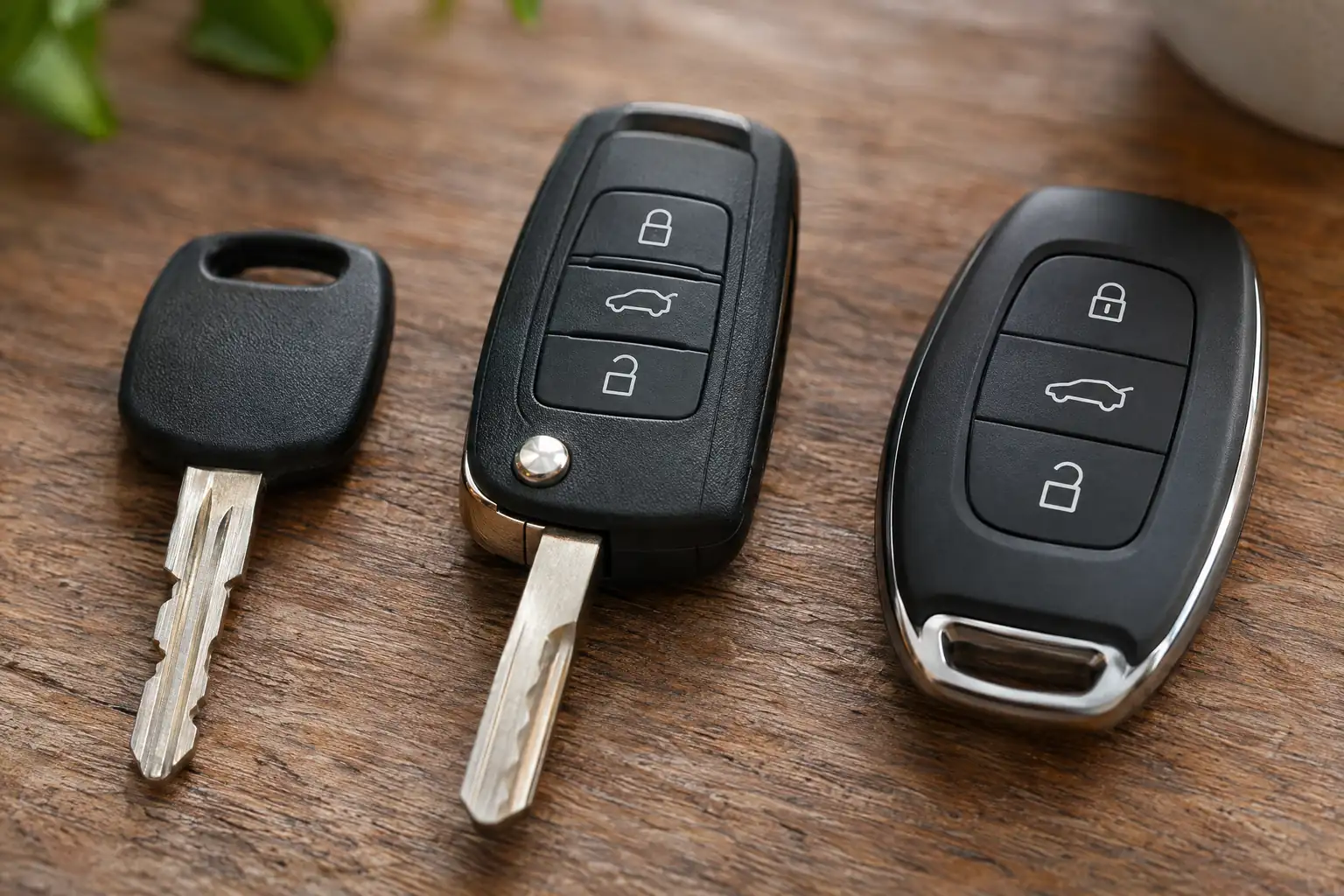
Plain blade with no buttons: a metal key, or a transponder key if the car is from the late 1990s or newer. Blade with buttons on the head: a remote-head key. Blade that folds into the fob: a flip key. No blade in use and a start button on the dash: a smart key or proximity fob.
Plain metal and transponder keys
A key with a plain plastic or metal head may still carry a transponder chip. If the car stalls with a freshly cut copy, the chip was the missing part. The owner's manual or the dealer can confirm whether your car uses one.
Remote-head and flip keys
Buttons on the key head mean a remote is built in. The blade, the chip and the remote are separate jobs: a key can open the doors and still fail to start the car if the chip side was not programmed.
Smart keys and proximity fobs
If the car starts with a button and unlocks when you touch the handle, it uses a smart key. The FCC ID on the back of the fob identifies the exact part, so read it out when you call.
What replacing each involves
A metal key only needs cutting. A transponder key needs cutting and chip programming. Remote-head and flip keys add pairing the buttons. A smart key needs the right fob, programmed to the car, plus its emergency blade cut. The type, the make and whether a working key exists decide the estimate.
Was this guide helpful?